High Performance Computing Applications at UQ

A document assembled by the Users' Group
August 1997

The following research projects make use of the Silicon Graphics Power Challenge supercomputer at The University of Queensland and/or the QPSF SP/2 supercomputer at Griffith University. The initial data was collected in 1996 and has been updated to reflect activities in 1997. The project abstracts are grouped by Department or Research Centre.


Project Titles


Advanced Wastewater Management Centre / Chemical Engineering

Advanced Computational Modelling Centre/Department of Mathematics

Centre for Computer Aided Process Engineering / Chemical Engineering

Centre for Drug Design & Development

Centre for Magnetic Resonance/Department of Mathematics

Queensland University Advanced Centre for Earthquake Studies

W. H. Bryan Mining Geology Research Centre

Department of Chemistry

Department of Computer Science

Department of Mathematics

Department of Civil Engineering

Department of Electrical and Computer Engineering

Department of Mechanical Engineering

Department of Physics


Project Abstracts
(sorted by Centre/Department)


Advanced Wastewater Management Centre / Chemical Engineering

Design and Operation of Unaerated Wastewater Treatment Ponds

Investigator: Matthew Wood
Department: Chemical Engineering
Collaborators: CRC for Waste Managment and Pollution Control

The objective of this project is to improve the performance of unaerated wastewater ponds. In order to achieve this the effect of various pond designs and modifications need to be evaluated. Unfortunately the limitations of experimental investigations mean that a model of the ponds must be used to predictively determine the ponds performance. Traditional pond models are unable to predict the effect of geometric changes on hydraulics, thus computational fluid dynamics (CFD) is used to investigate the hydraulics in a pond, and thus determine the performance.

Publications:

  1. Wood, M. G., Johns, M. R., Howes, T., and Keller, J. (1996). "Analysis of Two Dimensional Computational Fluid Dynamic Models for Waste Stabilisation Ponds." Submitted to Water Research 8/96.

[Go back to the list of titles]


Advanced Computational Modelling Centre / Department of Mathematics

Large-scale linear algebra and differential equations

Investigator: Roger B. Sidje
Collaborator: Kevin Burrage
Department: Mathematics / Advanced Computational Modelling Centre

Designing and Implementing High Performance Algorithms for the solution of Large-Scale Numerical Linear Algebra Problems and Differential Equations.

Publications:

  1. Spotlight on the SGI POWER CHALLENGE array. http://www.maths.uq.oz.au/~rbs/sgi
  2. Self-starting Guide for the IBM SP2 http://www.maths.uq.oz.au/~rbs/sp2guide.ps
  3. Alternatives for Parallel Krylov Basis Computation Accepted for publication in Numerical Linear Algebra with Applications. http://www.maths.uq.oz.au/expokit/others/alpar.ps
  4. A Survey of Methods for Computing Large Sparse Matrix Exponentials Arising in Markov Chains. (co-author W. J. Stewart, North Carolina State University). Technical Report No. 96-06, Computer Science Department, North Carolina State University, Raleigh NC 27695-8206, 1996. http://www.maths.uq.oz.au/expokit/others/survey.ps
  5. Fast Generalized Cross-Validation. (co-author: A. Williams, Sandia National Laboratories). International Linear Algebra Year: Linear Algebra in Optimization, April 22--25, 1996, Albi, France. Submitted to SIAM J. Numer. Anal. http://www.maths.ua.oz.au/expokit/others/gcv.ps

[Go back to the list of titles]


Centre for Computer Aided Process Engineering / Chemical Engineering

Warehouse Fire Plume Dynamics

Investigators: Ian Cameron, Andrew Ward (PhD Student)
Department: Computer Aided Process Engineering Centre, Department of Chemical Engineering

The research seeks to develop 3D models of the downwind concentration of combustion products resulting from warehouse fires where the roof may be intact or collapsed. The work looks at plume lift off and the influence of the atmospheric flow field on the impact of the plume.

In particular we are using FIDAP as a CFD tool. The work involves 3D finite element simulations of the flow field which must resolve the turbulence down to a fine grid. The distances of interest for near field dispersions extend to several kilometres from the warehouse.

The work is using large scale wind tunnel test done in the UK as a means of validating the CFD approach. The modelling work considers the effect of fire growth, the condition of the warehouse and the effect of nearby structures in promoting downwash of the fire plumes.

The final outcome of this work is to develop effective shortcut techniques which can be used for landuse planning by local authorities as well as emrgency response by fire services and police.

The scale of the simulations is such that the work could not be carried out onconventional computing machines. The use of the Power Challenge array has made this work possible.

[Go back to the list of titles]


Centre for Drug Design & Development

General molecular modelling support for 3D centre

Investigator: Michael Dooley
Department: Centre for Drug Design and Development
Collaborators: Mark Smythe

Molecular modelling: so far only dynamics studies of large peptides.

[Go back to the list of titles]


Centre for Magnetic Resonance/Department of Mathematics

Determination of spin Hamiltonian parameters of EPR spectra using non-linear optimisation techniques

Investigator: Craig Eldershaw
Department: Mathematics, Centre for Magnetic Resonance
Collaborators: Kevin Gates, Kevin Burrage, MPG, Graeme Hanson

[Go back to the list of titles]


Queensland University Advanced Centre for Earthquake Studies

Large scale modelling of seismic waves to study site effects

Investigator: Fabien Coutel
Department: Q.U.A.K.E.S Centre
Collaborators:

This project aims at studying local amplification of seismic waves (site effects) that are responsible for increasing the degree of devastation of numerous earthquakes. Numerical modelling using the pseudospectral method is used to better understanf these amplifications. Tests were conducted using the topography and subsurface models adjacent to Brisbane Airport and a volcano in the Reunion Island.

Publications:

  1. Komatitsch, D., Coutel, F., and Mora, P., 1996, Tensorial formulation of the wave-equation for modeling curved interfaces, Geophys. Jour. Internat., in publication
  2. Coutel, F., and Mora, P., 1996, Seismic wave simulation in complex structures to study site amplifications, in: The Seismic Simulation Project # 14 (The University of Queensland).
  3. Coutel, F., Komatitsch, D. and Mora, P., 1996, "Seismic wave simulation in complex structures to study site amplifications", in AGU 1996 Western Pacific Geophysics meeting, Brisbane, Australia

[Go back to the list of titles]


Development of massively parallel algorithms to simulate earthquakes and fracture processes

Investigator: David Place
Department: QUAKES - Earth Sciences Department
Collaborators: Peter Mora

A lattice solid model capable of simulating the physics of rocks and the non-linear dynamics of earthquakes has been refined. This enable the causes of seismic wave attenuation to be studied, as well as heat generation and the development and effect of fault gouge on earthquakes.

Publications:

  1. The lattice solid model to simulate the physics of rocks and earthquakes: incorporation of friction, QUAKES Tech. Report 14., 1996.
  2. Towards large scale simulation of the physics of rocks and earthquakes, QUAKES Tech. Report 14., 1996.

[Go back to the list of titles]


W. H. Bryan Mining Geology Research Centre

Implementing and Comparing Estimation Methods: Robust and Median Polish Kriging, Sequential Simulation, and Fractal Geostatistics

Investigator: J. Felipe Costa
Department: W.H. Bryan Mining Geology Research Centre

Evaluation the performance in terms of local accuracy of various interpolation and simulation methods in the context of mining applications Five methods were implemented and tested. The quality of the estimates were obtained by comparing the estimated values with the reference data set. To proceed with the estimations a sub-sample extracted from the reference data set was used.

Publications:

  1. "Comparing the estimates resulting from ordinary and robust kriging" J. Felipe Costa, Dr. Andrew H. White and Dr. Marco T. M. B. Vilhena To appear in the 26th International APCOM, USA, September 1996
  2. "Geostatistics for contouring networth value of coal deposits" R .F. Borba; J. C. Koppe, and J. F. Costa To appear in the 5th Geostatistics International Congress, Australia, September 1996
  3. "Fractal Geostatistics as a Tool to Interpolate Sparsely Sampled Data sets" J.F. Costa; M.H. Kay and A.H. White Submitted to Journal of Mathematical Geology
  4. "Mine planning assisted by geostatistical conditional simulation: Petrosix oil shale deposit in Brazil" A.C. Zingano, J.C. Koppe, J.F. Costa To appear in the 5th International Mining Planning and Equipment Selection Congress, Brazil, October 1996
  5. "Environmental issues and social aspects of amethyst underground mining in southernmeost Brazil". J.C. Koppe and J.F. Costa To appear in the SWEMP96, Italy, August 96

[Go back to the list of titles]


Integration of Geophysics in Geostatistical Modelling

Investigator: Matthew Kay
Department: WH Bryan Mining Geology Research Centre

Mine planning has relied on the existance of 3-D models of the subsurface. Traditionally this has been constructed using chemical assay data derived from drilling information

My study aims to investigate ways of integrating geophysical data into modelling process. It involves the investigation of existing methodologies and the development of new techniques. As this study is computer intensive, access to the HPCU is extremely desirable. This is because I don't have access to any other high-performance machines.

Publications:

  1. "Fractal Geostatistics as a Tool to Interpolate Sparsely Sampled Data sets" J.F. Costa; M.H. Kay and A.H. White Submitted to Journal of Mathematical Geology

[Go back to the list of titles]


Department of Chemistry

Theoretical characterization of the minimum energy pathways of the bond association/dissociation steps for the NH2+NO reaction using spin-unrestricted density functional theory

Investigator: Eric Wei-Guang Diau
Department: Chemistry
Collaborators: Sean C. Smith

The minimum energy pathways (MEP1-MEP7 associated with the corresponding intermediates 1-7) of the bond-rupture processes involving in the NH2+NO reaction have been characterized using spin-unrestricted density functional theory with the geometry of each point along the reaction coordinate (R) optimized at the UB3LYP/6-311G(d,p) level of theory. MEP1 describes a NN bond-breaking path from the intermediate 1 directly dissociating to form the reactants NH2+NO with a spin purity breakpoint occurring around R=3D2.1 =8F. Following the NO bond-dissociation paths of MEP2-MEP7 leads to the radical product channel (HN2+OH) with the breakpoint occurring around R=3D2.0 =8F. However, it has also been shown that there is a common local minimum, whose geometry and energetics are very close to those of the dissociation products, involved in the reaction paths MEP2, MEP6 and MEP7 and that the energy barriers connecting this local minimum with the corresponding intermediates (2, 6 or 7) are insignificant. Therefore, the isomerization from intermediate 2 to 6 or 7 followed by rapid dissociation through the N2+H2O product channel would be another alternative for MEP2, in addition to the direct dissociation forming HN2+OH. Another local minimum has been found in the bond-breaking path of MEP3 but without affecting the trend of further dissociation. For MEP4 and MEP5, only part of the reaction path has been characterized due to the difficulty of convergence of the energy optimization along their individual reaction coordinates. According to the results of MEP1 and MEP2 studied with three different basis sets [6-311G(d,p), 6-311+G(d,p) and cc-pVQZ], the entire single-bond-breaking potential curve for the system predicted at the UB3LYP level appears to be relatively insensitive to the basis functions. The geometries of the separating fragments associated with the various MEP=92s have been found to relax quickly along the respective reaction coordinates, in particular reaching the asymptotic bond angles and bond lengths around R=3D2 =8F for= MEP1, MEP2, and MEP3.

Publications:

  1. Eric W. -G. Diau and Sean C. Smith, "Temperature dependence of rate coefficients and branching ratios for the NH2+NO reaction via microcanonical variational transition state theory", J. Phys. Chem. vol 100 p12349 (1996).

[Go back to the list of titles]


Statistical Theories for Absolute Reaction Rates, Recombination Rates, and Product Branching Ratios in Collision-Complex- Forming Bimolecular Reactions.

Investigators: W.-G. Diau and S.C. Smith
Department: Chemistry

An objective of our research which runs parallel to the achievement of fundamental advances in unimolecular rate theory is the continued improvement of methods for computing thermal rate coefficients as a function of temperature and pressure, accurate estimates of which are vital for combustion and atmospheric modelling. In recent years, we have developed new theoretical methods for the implementation of microcanonical variational transition state theory (mVTST) which have enabled a dramatic enhancement in the speed of rate coefficient calculations for dissociation and recombination reactions proceeding via loose (e.g., radical-radical) transition states [1,2]. These developments have opened up new possibilities for accurate modelling of complex radical-radical reactions involving multiple channels and multiple wells [e.g., 3]. Ab initio quantum chemical calculations provide details of the potential energy surface which are crucial to the reliability and predicitve capability of the kinetics calculations [4].

[1] S.C. Smith, "Rapid Algorithms for Microcanonical Variational Rice-Ramsperger-Kassel-Marcus Theory", J. Phys. Chem. 97, 7034 (1993).
[2] S.C. Smith, "Flux Factors in Variational Transition State Theory", J. Phys. Chem. 98, 6496 (1994).
[3] E. W.-G. Diau and S.C. Smith, "Calculation of the Temperature Dependence of Rate Coefficients and Branching Ratios for the NH2+NO Reaction via Microcanonical Variational Transition State Theory", J. Phys. Chem. 100, 12349 (1996).
[4] E. W.-G. Diau and S.C. Smith, "Theoretical Investigation of the Potential Energy Surface for the NH2+NO Reaction via Density Functional Theory and Ab Initio Molecular Electronic Structure Theory", J. Chem. Phys., 106(22) (1997).

[Go back to the list of titles]


Calculations on the rearrangements of highly reactive intermediates

Investigator: R. B. Koch
Department: Chemistry
Collaborators: Curt Wentrup

Quantum mechanical (ab initio and semi-empirical) calculations on the rearrangements of highly reactive intermediates.

[Go back to the list of titles]


Molecular Dynamics Studies of Dense Fluids

Investigator: Debra J. Searles
Department: Chemistry

Molecular dynamics studies have been carried out in order to determine fluid properties with particular interest in their chaotic properties. The work can be divided into three projects:
(i) Large scale simulations have been carried out on liquid and model systems in order to investigate the dependence of the maximum Lyapunov exponent on the number of degrees of freedom (or number of particles, N) in the system. Whereas thermodynamic and transport properties are found to converge as 1/N, the maximum Lyapunov exponent, which is a measure of chaos, appears to diverge logarithmically.
(ii) The behaviour of the thermal conductivity and the isothermal compressibility of a Lennard-Jones fluid in the viscinity of the gas/vapour critical point has been investigated usine molecular dynamics and nonequilibrium molecular dynamics simulations. Current results are consistent with theory and experiment.
(iii) The Lyapunov spectrum of the hard disk model of liquids has been calculated from the stability matrix of a single trajectory. The results are consistent with results obtained by simulation tangent trajectories.

Publications:

  1. "The Number Dependence of the Maximum Lyapunov Exponent", submitted Physica.
  2. "Critical Point Thermal Conductivity from Molecular Dynamics Simulations", presented at the 3rd Liquid Matter Conference, Norwich 1996.
  3. "Calculation of the Hard Disk Lyapunov Spectrum", D. Searles, in preparation

[Go back to the list of titles]


Solution of multidimensional stochastic master equations for chemical kinetics applications

Investigator: Sean C. Smith
Department: Chemistry
Collaborators: Professor Kevin Burrage, Dr Kevin Gates (Mathematics, UQ);
Dr Struan Robertson (School of Chemistry, University of Leeds);
Professor David Clary (Department of Chemistry, University College London).

Development of methods for computing chemical rate coefficients over a wide range of tempartures and pressures by variational transition state theory and the solution of multidimensional master equations which allow for the non-equilibrium distributions of internal energy and angular momentum in the reacting molecules.

Publications:

  1. Sean C. Smith, "A pseudo-spectral algorithm for the computation of transitional-mode eigenfunctions in loose transition states", Chem. Phys. Lett., vol 243, p359, 1995.
  2. Stephen J. Jeffrey, Kevin E. Gates and Sean C. Smith, "Full Iterative Solution of the Two-Dimensional Master Equation for Thermal Unimolecular Reactions", J. Phys. Chem., vol 100, 7090 (1996).
  3. Sean C. Smith and Stephen J. Jeffery, "On the calculation of absolute spectral densities." J. Chem. Phys. vol 105(9) in press (1996)

[Go back to the list of titles]


Quantum dynamics of unimolecular reactions

Investigator: Sean C. Smith
Department: Chemistry
Collaborators: Professor Kevin Burrage, Dr Kevin Gates (Mathematics, UQ);
Dr Struan Robertson (School of Chemistry, University of Leeds);
Professor David Clary (Department of Chemistry, University College London).

Development of high performance algorithms for quantum wave packet propagation in the simulation of dissociation and recombination reactions. Calculation of molecular rovibrational bound states and resonances.

[Go back to the list of titles]


Theoretical study of organic reactive intermediates

Investigator: Ming Wah (Richard) Wong
Department: Chemistry
Collaborator: Curt Wentrup

The aim is to study recently discovered new classes of reactive intermediates and new chemical rearrangement reactions. The interplay between theory and experiment is extremely important. The very nature of the intermediates makes the collection of reliable experimental data difficult. High level ab inito calculations using the GAUSSIAN94 package help by providing structures, energies absorption spectra and reaction pathways, and provide useful guides in the search of novel chemical species.

Publications:

  1. "Ab Initio Calculation of Molar Volumes: Comparison with Experiment and Use in Solvation Models", M.W. Wong, K.B. Wiberg and M.J. Frisch, J. Comput. Chem. 16 (1995) 385.
  2. "Acetylketene: Conformational Isomerism and Photochemistry. Matrix Isolation Infrared and Ab Initio Studies", C.O. Kappe, M.W. Wong and C. Wentrup, J. Org. Chem. 60 (1995) 1686.
  3. "The Use of 1,2-shifts in Carbenes and Nitrenes in the Generation of Novel Heterocumulenes", C. Wentrup, C.O. Kappe and M.W. Wong, Pure & Appl. Chem. 67 (1995) 749.
  4. "Polycarbon Sulfides CnS (n=3D2-6) and Corresponding Hydrides HCnS*. Neutralization-Reionization Mass Spectrometry and Ab Initio MO Study", R. Flammang, Y. van Haverbeke, M.W. Wong and C. Wentrup, Rapid Commun., Mass Spectrom. 9 (1995) 203.
  5. "Radical Addition to Alkenes: An Assessment of Theoretical Procedures", M.W. Wong, and L. Radom, J. Phys. Chem. 99 (1995) 8582.
  6. "Ketene Rearrangements and 1,3-Shifts", C. Wentrup and M.W. Wong, in Atualidades de Fisico-Quimica Organica, J. J. E. Humeres, Ed., Florianopolis, Brasil, 1995. 20
  7. "A Remarkably Stable Ketenimine", R. Wolf, M.W. Wong, C. H. L. Kennard and C. Wentrup, J. Am. Chem. Soc. 117 (1995) 6789.
  8. "Structures and Stabilities of XCCY2+ (X, Y =3D NH, O and S) Dications", M.W. Wong, J. Mass Spectrom. 30 (1995) 1144.
  9. "Vinylketene-Acylallene Rearrangement", H. Bibas, M.W. Wong and C. Wentrup, J. Am. Chem. Soc. 117 (1995) 9582.
  10. "Structures and Stabilities of Gas-Phase C6H4X- (X =3D F, Cl and Br) Ions: Halide-Benzyne Complexes?", M.W. Wong, J. Chem. Soc. Chem. Commun. (1995) 2227.
  11. "Polycarbon Disulfides SCnS (n =3D 1-3) and their Protonated and Methylated Forms (HCnS2+ and CH3CnS2+): Tandem Mass Spectrometry and Ab Initio MO Study", M.W. Wong, R. Flammang and C. Wentrup, J. Phys. Chem. 99 (1995) 16849.
  12. "Photochemistry of Deuteurated Acetylketene: Matrix Isolation Infrared and Ab Initio Studies", R. Zuhse, M.W. Wong and C. Wentrup, J. Phys. Chem. 100 (1996) 3917.
  13. "An Unexpected Effect of the Nature of the Collision Gas in Collisional Activation Mass Spectrometry", R. Flammang, L. Gallez, Y. Van Haverbeke, M. W. Wong and C. Wentrup, Rapid Commun., Mass Spectrom. 10 (1996) 232.
  14. "2-Pyridylnitrene - 1,3,-Diazacyclohepta-1,2,4,6-tetrane Rearrangements in the Trifluoro-methyl-2-pyridyl Azide Series", R. A. Evans, M.W. Wong and C. Wentrup, J. Am. Chem. Soc. 118 (1996) 4009.
  15. "Prediction of Vibrational Frequencies by Using Density Functional Theory", M.W. Wong, Chem. Phys. Lett. 256 (1996) 391.
  16. "Cyanovinylketenes From Azafulvenones: An Apparent Retro-Wolff Rearrangement", G.G. Qiao, W. Meutermansand, M.W. Wong and C. Wentrup, J. Am. Chem. Soc. 118 (1996) 3852.
  17. "Characterization of New Cumulenes C2NX2 (X =3D O or S): Tandem Mass Spectrometry and Ab Initio Studies", M.W. Wong, C. Wentrup, E.H. Mrkved and R. Flammang, J. Phys. Chem. 100 (1996) 10536.
  18. "Novel Heterocumulenes (RN=3DC=3DC=3DC=3DX) and Ketene Rearrangements", C. Wentrup, B.E. Fullon, D.W.J. Moloney, H. Bibas, M.W. Wong, Pure & Appl. Chem. 68 (1996) 891.
  19. "Interconversions of Phenylcarbene, Cycloheptatetraene, Fullenallene= and Benzo-cyclopropene. A Theoretical Study of the C7H6 Potential Energy= Surface", M.W. Wong and C. Wentrup, J. Org. Chem., in press.
  20. "Novel Heterocumulenes: Bisiminopropadienones and Linear Ketenimines", R. Wolf, Stefan Stadtmller, M.W. Wong, M. Barbieux-Flammang and R. Flammang, Europ. J. Chem., in press.
  21. "Facile 1,3- and 1,5-Chlorine Migration: An Ab Initio Study", R. Koch, M.W. Wong and C. Wentrup, J. Org. Chem., in press.
  22. "b-Azafulvenones: Direct Observation and Tetramerization to Porphyrin Analogues", G. G. Qiao, M.W. Wong and C. Wentrup, J. Org. Chem., submitted.
  23. "Generation of New Nitrile N-Suldides (NCCNS, R2NCNS, H3CCNS and ClCNS) as Ions and Neutrals in the Gas Phase: Tandem Mass Spectrometry, Flash-Vacuum Pyrolysis and Ab Initio MO Study", R. Flammang, P. Gerbaux, E.H. Mrkved, M.W. Wong and C. Wentrup, J. Phys. Chem., submitted.
  24. "Vinylketene-Acylallene Rearrangement: Theory and Experiment", H. Bibas, M.W. Wong and C. Wentrup, Europ. J. Chem., submitted.
  25. "Dicarboalkoxycarbenes. A Matrix Isolation Study of the Wolff Rearrangement and its Suppression", P. Visser, R. Zuhse, M.W. Wong and C. Wentrup, J. Am. Chem. Soc., submitted.

[Go back to the list of titles]


Quantum Characterization of Van der Waals Modes in Molecular Clusters

Investigators: H.G. Yu and S.C. Smith
Department: Chemistry

We are developing computer code for the prediction of bound-state eigenvalues associated with the floppy modes in molecular dimer clusters. The Hamiltonian operator formulated for a reduced dimensional model in which the two monomers of the cluster are treated as rigid rotors, which amounts to a six-dimensional computation for two non-linear species. Bound states are computed using our recently-developed MINRES Filter Diagonalization approach [1] which is based on a Lanczos subspace but suffers none of the complications of ghost eigenvalues which make interpretation of the Lanczos spectrum problematic. We utilize an extension of the pseudo-spectral algorithm used in our studies of loose transition states [2] for the action of the Hamiltonian. In this approach, the action of the potential is effected on a six-dimensional spatial grid, but in order to act with the rotational kinetic energy operator a transformation of the wavefunction to a body-fixed Wigner function representation is made.

[1] H.G. Yu and S.C. Smith, "The Calculation of Vibrational Eigenstates by MINRES Filter Diagonalization", Ber. Bunsenges. Phys. Chem., 101, 400 (1997).
[2] S.C. Smith, "A Pseudo-Spectral Algorithm for the Computation of Transitional Mode Eigenfunctions in Loose Transition States", Chem. Phys. Lett. 243, 359 (1995).

[Go back to the list of titles]


Calculation of Highly-Excited Vibrational Eigenstates and Resonances.

Investigators: H.G. Yu and S.C. Smith
Department: Chemistry

We have recently developed new spectral filtering and filter diagonalization methods, based on Lanczos and related Krylov-space algorithms, which enable the efficient calculation of highly-excited bound states and resonances [1-5]. A particularly useful feature of our method is the elimination of the ghosting problem which normally complicates the application of the Lanczos method. As a result of these new developments, it is possible to determine complete spectral information including bound state energies, resonance energies and lifetimes from a single iterative calculation [5].

[1] H.G. Yu and S.C. Smith, "Restarted Krylov-Space Spectral Filtering", Faraday Transactions, 93, 861 (1997).
[2] H.G. Yu and S.C. Smith, Ber. Bunsenges. Phys. Chem., 101, 400 (1997).
[3] H.G. Yu and S.C. Smith, "The Elimination of Lanczos Ghosting by MINRES Filter Diagonalization", J. Comp. Phys., submitted.
[4] H.G. Yu and S.C. Smith, "The Imposition of Outgoing-Wave Boundary Conditions via a Symmetrically-Damped Hermitian Hamiltonian Operator", J. Chem. Phys., submitted.
[5] H.G. Yu and S.C. Smith, "Calculation of Quantum Resonance Energies and Lifetimes via Quasi-Minimum Residual Filter Diagonalization", Chem. Phys. Lett., submitted.

[Go back to the list of titles]


Department of Computer Science

Parallel coset enumeration

Investigator: George Havas
Departmen: Computer Science
Collaborators: Gene Cooperman, Northeastern University, Boston, MA

Coset enumeration is a most important procedure for investigating finitely presented groups. We present a practical parallel procedure for coset enumeration on shared memory processors. The shared memory architecture is particularly interesting because such parallel computation is both faster and cheaper. The lower cost comes when the program requires large amounts of memory, and additional CPU's allow us to lower the time that the expensive memory is being used.

Rather than report on a suite of test cases, we take a single, typical case, and analyze the performance factors in-depth. The parallelization is achieved through a master-slave architecture. This results in an interesting phenomenon, whereby the CPU time is divided into a sequential and a parallel portion, and the parallel part demonstrates a speedup that is linear in the number of processors. We describe an early version for which only 40% of the program was parallelized, and we describe how this was modified to achieve 90% parallelization while using 15 slave processors and a master. In the latter case, a sequential time of 158 seconds was reduced to 29 seconds using 15 slaves.

Publications:

  1. TITLE: Practical parallel coset enumeration
    AUTHORS: Gene Cooperman and George Havas
    CITATION: Workshop on High Performance Computing and Gigabit Local Area Networks, Lecture Notes in Control and Information Systems 226 (1997) 15-27
    ( http://www.cs.uq.edu.au/personal/havas/TR0359.dvi.gz )

[Go back to the list of titles]


Department of Mathematics

The Computer Simulation of Liquid Phase Sintering

Investigators: G.B.Schaffer (Dept Mining, Minerals and Materials Eng) & J.A.Belward
Department: Mathematics

The aim of this project was to construct a computer model to simulate microstructural development during liquid phase sintering. We had previously developed a model which could simulate some aspects of solid state sintering in a two dimensional, single phase system. In that case, a cross section through a wire winding was represented by a series of close packed circles. This is a simple system and therefore a reasonable starting point. Sintering was simulated using a Monte Carlo technique which we had adapted from one which had been developed by others to model recrystallization. A continuum structure is superimposed onto a 2-D lattice. Each lattice site is assigned a number corresponding to either an atom or a vacancy. The number of vacancies can vary with the simulation temperature, while a cluster of vacancies is a pore. The energy of each lattice site is defined in terms of the interactions with neighbouring sites. A lattice site is picked at random and re-oriented in terms of the atomistic model governing mass transport. The probability of the change being accepted is dependent on the change in the number of nearest neighbours, which is a measure of the energy of the site. Progress is monitored by measuring the density, defined by the pore area; and the pore shape, defined by the rugoscity coefficient. The latter is the perimeter of the pore divided by the circumference of a circle of equal area as the pore The aim of the new project was to extend the model to simulate liquid phase sintering. We had initially confined ourselves to the solid state because of its relative simplicity. However, liquid phase sintering has wider applicability. Most metallic systems and many ceramic systems are sintered in the presence of a liquid phase. It is a much more prevalent commercial process. This was the rationale for the change in direction.

It soon became apparent that this was a very complicated system for the relatively simple model we had developed to simulate solid state sintering. In order to reduce the complexity of the problem to manageable proportions, we limited our investigations to the final stages of sintering where shrinkage is almost complete and coarsening of the solid phase occurs by Ostwald ripening.

Interface control occurs when the coarsening rate is determined by reactions at the interface. Under diffusion control, the particle size, d, is proportional to t3. Under interface control, d is proportional to t2. In our simplified system, diffusion through the liquid is assumed to be infinitely fast and interface control is expected. Our data tends to fall on a straight line when d0.5 is plotted against time. This also serves to validate our results.

We used the Power Challenge to carry out the simulation. We usually ran batch jobs and processed the results locally. The code relied on the compiler to generate an efficient executable file. The turn round time was usually overnight.

Without the Power Challenge our progress would have been considerably slower. Given the simplicity of the model, it is evident that we shall have to look for methods less demanding of resources, however the eventual scale of the problem means that we shall almost certainly need cutting edge performance to make a realistic simulation. One of the solutions which we investigated briefly involved the use of genetic algorithms. This greatly enhances computational efficiency allowing us to tackle complex problems in a shorter time frame. This will be further explored in future projects.

[Go back to the list of titles]


Smallest critical sets for the groups of size eight

Investigator: Abdollah Khodkar
Department: Department of Mathematics

Use of CPLEX to solve an integer programming problem.

[Go back to the list of titles]


Iterated Multistep Runge-Kutta (IMRK) Methods

Investigator: Heru Suhartanto
Department: Mathematics

Research projects are mainly part of my PhD thesis. The thesis will study parallel methods based on Iterated Multistep Runge-Kutta (IMRK) of Radau type for solving Ordinary Differential Equations (ODEs), Partial Differential Equations (PDEs), and Hamiltonian Differential Equations (HDEs). The work on these topics are motivated by results of van der Houwen and Sommeijer , the existence of MRK of higher order, 2*s+k-2, where k and s respectively denote the number of past solutions and stages required by the methods. The result of van der Houwen et al. show that it is possible to construct parallel iterated methods based on implicit Runge-Kutta methods, which are seldom used in codes due to a number of coupled nonlinear algebraic equations which have to be solved on everystep. Following their ideas, there will be a great advantages when the core methods is MRK from which one could obtain parallel high order methods. Both non-stiff and stiff problems will be considered and the methods' performance will be compared with the available parallel methods.

Solving ODES resulting from discretizing PDEs in space will be the second part of the thesis. Some areas of this topic have been done by some researchers. These covers parallelism across the space which are handled by operator splitting and waveform relaxation. But the problem will become more complex when parallel across the method is also considered. Parallel LSODE code, which are under construction of its author, and parallel Iterated Runge-Kutta code will be good partners to compare with parallel codes based on IMRK.

The final part of thesis will cover the possibilities of constructing parallel methods based on IMRK for solving Hamiltonian problems. The problems, which have gained much attention recently, are solved by using so-called symplectic or canonical methods. The results of people working on this area show that the problem is not suitably solved by non-symplectic methods.

[Go back to the list of titles]


Department of Civil Engineering

Refined theory for laminated plates

Investigator: Cheng-Chung Chen
Department: Civil engineering

Develop theories and computational models for investigating the vibratory characteristics of general laminated plates.

Publications:

  1. "Vibration analysis of arbitrary quadrilateral unsymmetrically laminated thick plates."
  2. Free vibration of symmetrically laminated thick plates with various boundary conditions."

[Go back to the list of titles]


Behaviour of thin-walled concrete box girders

Investigator: Lars Rasmussen
Department: Civil Engineering

A finite element (non-linear) program is used to describe how the plasticity spreads in a box girder bridge.

[Go back to the list of titles]


Three-dimensional modelling of turbulent flow in an irregular open channel.

Investigator: Qi Xie
Department: Civil Engineering
Collaborators: Prof. Colin Apelt

This project has involved the use of FIDAP to simulate the three-dimensional turbulent flow in an irregular open channel.

[Go back to the list of titles]


Department of Electrical and Computer Engineering

On-line HMM training for adaptive speech systems

Investigator: Brett Watson
Department: Electrical Engineering
Collaborator: Ah Chung Tsoi

The project involved exploring techniques for adapting speech recognition systems trained for one speaker or set of conditions to another. This is of interest because optimum recognition performance for a system is achieved by training that system with samples from the same speakers which will use it, recorded in the same acoustic environment (which is also preferably noise free) in which it will be used. These requirements frequently are impractical. Hence, methods which instead adapt an existing system to better match a new speaker may be useful.

The techniques used are based on gradient descent maximisation of the likelihood functions for the hidden Markov models which have become a de facto standard for acoustic modelling in speech recognition.

Publications:

  1. B. Watson, "On-line HMM Training for Adaptive Speech Systems", PhD Thesis, University of Queensland, May 1996 (currently being examined)

[Go back to the list of titles]


Department of Mechanical Engineering

The turbulent structure of a highly heated air jet

Investigator: Susan Anderson
Department: Mechanical Engineering
Collaborator: Prof. K. Bremhorst

The project is an experimental one where I am taking turbulent measurements in a highly heated air jet to determine the dissipation time scale ratio. Measurements of velocity and temperature are taken with a triple hot wire set up. An A/D card samples three channels simultaneously (2 velocity and 1 temperature) at a maximum of 80khz (total) for about 40 seconds, resulting in a 5 MB data file. This data file is for one point and on average I take 40 points per profile and about 5 profiles per run, so I need to quicky reduce my data files and obviously the disc space it uses. I use the C-compiler on Moreton and Fraser to run my data reduction program.

[Go back to the list of titles]


Simulation of Lyapunov experiments for stochastic dynamic systems

Investigator: Sam Asokanthan
Department: Mechanical Engineering

Numerical evaluation of top Lyapunov exponents are used to characterise behaviour of several practical mechanical systems.

[Go back to the list of titles]


Scramjet control

Investigator: Kevin Austin
Department: Mechanical Engineering
Collaborators: Peter Jacobs & Sam Asokanthan

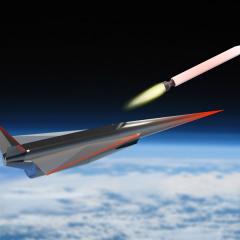
Investigation of the control requirements of a hypersonic air-breathing vehicle. These type of aircraft are inherently unstable with a high degree of intergration between airframe, engine, and dynamics. Simulation of the non linear dynamics coupled with an aerodynamic model is required and to date Matlab has been used for this.

[Go back to the list of titles]


Solar Car Aerodynamics.

Investigator: B. Banney
Department: Mechanical Engineering
Collaborators: Srdjan Nesic (Mech. Eng., UQ)

This project will use PHOENICS to simulate the flow around the UQ Solar Car.

[Go back to the list of titles]


Computational Fluid Dynamics for Design and Optimisation of Sramjet Combustors and Nozzles

Investigator: Chris Craddock
Department: Mechanical Engineering
Collaborator: Peter Jacobs

Scramjet engines exhibit high enthalpy supersonic flows in the combustor region that can be computationally very expensive to model. To faithfully model the flow, finite rate chemical kinetics and hypersonic viscous flow interactions need to be simulated but at the same time a need for fast solution turn around is also important. The design of such combustion chambers has historically been based on experimental analysis and simplified computational modeling. This method of "design and try" cycling has been adequate for the most part however it inherently takes a lot of time and money before the optimum design is achieved.

Publications:

  1. Jacobs, P. A. and Craddock, C. S., "Simulation and Optimisation of Three-Dimensional Flows in Scramjet Ducts" Twelfth International Symposium on Air Breathing Engines Conference. Melbourne, Australia. September 1995.
  2. Craddock, C. S. "A Quasi-One-Dimensional Flow Solver with Finite Rate Chemical Effects", Departmental of Mechanical Engineering Report. The University of Queensland, 1996.

[Go back to the list of titles]


Square Section Hypersonic Nozzle Design

Investigators: Chris Craddock, Peter Jacobs, Joanna Austin
Department: Mechanical Engineering

The design of a square section nozzles for the small hypersonic shock tunnel facility is currently underway in the Department of Mechanical engineering. A square section nozzle produces a cleaner test flow in comparison to conventional axisymmetric nozzles. Axisymmetric nozzles focus disturbances at the center and these disturbances propagate to the test core. Square section nozzles do not focus disturbances to a point but rather to the two symmetry lines which is more dissipative.

The design of a square section nozzle is a highly three- dimensional problem which cannot be handled with traditional design techniques. The approach being taken for this study is computational. A three-dimensional fluid dynamic flow solver has been written (which was developed on the SGI) that can simulate the flow through arbitrary ducts with high fidelity. The solver is being used to simulate the flow through a base line nozzle design of a square section nozzle and then an optimisation routine iteratively makes slight modifications to the design to achieve the desired flow conditions at the exit. Each nozzle simulation takes approximately 24hrs (based on current SGI load) to complete and the optimiser takes anywhere from 20 to 100 iterations to reach a converged solution.

Currently, the SGI is being used to find an efficient base line design. It is crucial to start with a promising design before the optimisation routine is started since many hours of CPU time could be wasted. Clearly, looking at the solution time scale, a fast machine is required to solve this design problem.

[Go back to the list of titles]


The optimum design of heat exchanger inside the thermoacoustic engine

Investigator: Haruko Ishikawa
Department: Mechanical Engineering
Collaborator: David Mee

To design an efficient heat exchangers inside the thermoacoustic engine, simulation of heat exchanger inside the thermoacoutic engine is carried out using Phoenics. This is the study of heat transfer within the sound wave with large temperature gradient and without the temperature gradient.

[Go back to the list of titles]


Identification of starting transients in a reflected shock tunnel

Investigator: Peter Jacobs
Department: Mechanical Engineering
Collaborator: Klaus Hannemann

When high Mach number nozzles are used on reflected-shock tunnels, there is a significant (and undesirable) delay before the test flow settles to a useable steady state. Previous studies, in which the transients flow through a typical nozzles have been simulated, have not been able to identify the mechanisms causing the delay and so we shall attempt to simulate the flow in an entire shock-tube/nozzle combination. The simulation tools to be used are MB_CNS, which is a finite-volume code which now runs in parallel on the Power Challenge, and CEVCATSN, which is a multiblock, multigrid code developed at DLR, Gottingen.

Publications:

  1. Jacobs, P. A. "MB_CNS: A computer program for the simulation of transient compressible flows." Department of Mechanical Engineering Report 10/96, December 1996.
  2. Hannemann, K., Jacobs, P. A., Austin, J. M., Thomas, A. and McIntyre, T. J. "Transient and steady-state flow in a small shock tube." 21st International Symposium on Shock Waves Paper 2630, July 1997

[Go back to the list of titles]


Efficient Computational Analysis of Hypersonic Blunt Body Flows for Engineering Applications

Investigator: Ian Johnston
Department: Mechanical Engineering
Collaborator: Peter Jacobs

The SGI was used in the development of a new Computational Fluid Dynamics computer program for the calculation of hypersonic flows over blunt bodies. The CFD program has been used to verify experimental results obtained from the Mechanical Engineering Department's T4 hypervelocity shock tunnel, and expansion tube. The code has also been used to investigate the feasibility of a numerical Air Data System calibration.

When designing the shock tunnel experiments, results obtained on the SGI were used to determine the optimum size and location of models to be tested in the shock tunnel. Also, after the experiments were run, the code aided in the interpretation of results from experiments that had not been conducted under "ideal" test conditions.

The availability of support from the SGI administrators, as well as the development environment supplied on the machine, were both important factors which helped in the coding, testing, and optimizing of the program.

Publications:

  1. Johnston I A and Jacobs P A "Hypersonic Blunt Body Flows in Reacting Carbon Dioxide" Proc Twelfth Australaisan Fluid Mech Conf V2 Dec95
  2. Johnston I A and Jacobs P A "SF2D: A Shock Fitting and Capturing Solver for Two DImensional Compressible Flows" Dept of Mech Eng Technical Report 6/96 Univ of Qld Jul 96
  3. Smith AL Johnston IA and Austin KJ "A Comparison of Numerical and Experimental Drag Measurement in Hypersonic Flow" Royal Aeronautical Journal.
  4. Johnston, I. A., Tuttle, S. L., Jacobs, P. A. and Shimoda, T. "The numerical and experimental simulation of flow around the {HYFLEX} vehicle forebody." 21st International Symposium on Shock Waves Paper 6980, July 1997

[Go back to the list of titles]


Mass transfer in erosion/corrosion.

Investigator: Tony Keating
Department: Mechanical Engineering
Collaborators: Srdjan Nesic(Mech. Eng., UQ), R. Innes (student)

This project will use PHOENICS to model the mass transfer processes in erosion/corrosion.

[Go back to the list of titles]


Direct Simulation Monte Carlo (DSMC) calculations of rarefied gas nozzle flow

Investigator: Michael Macrossan
Department: Mechanical Engineering
Collaborator: David Mee

An application has been made to ARC to develop a high enthalpy test facilty for rarefied gas flow. Simulation calculations are being performed to aid in the design of a nozzle to be fitted to the expansion tube.

Future work will involve comparison of calculations of rarefied gas flow about simple shapes and experimental data from the new facility. This will allow development and verification of collision models and surface-gas interaction models in the rarefied gas regime.

[Go back to the list of titles]


Direct simulation Monte-Carlo methods in the near continuum regime

Investigator: Michael Macrossan
Department: Mechanical Engineering

The flow of a low density, high speed gas cannot be adequately described by the continuum Navier-Stokes equations; the particultae nature of the gas must be considered. The standard computational method for calculating the flow of a sufficiently rarefied gas is the Direct Simulation Monte Carlo (DSMC) method. There is a regime of intermediate rarefaction between where the Navier-Stokes equations become invalid and where it is computationally feasible to use direct simulation of molecular motions in the flow using DSMC.

This project is concerned with making the DSMC method more computaionally efficient (using modified procedures at higher densities) so that the "computational gap" between continuum and raefied gas flow can be closed.

[Go back to the list of titles]


Parallel Computation of Transient Flows within Hypersonic Impulse Testing Facilities

Investigator: Andrew Mc.Ghee
Department: Mechanical Engineering
Collaborator: Peter Jacobs

Using parallel computation to successfully simulate the starting flow characteristics of an Expansion tube as the primary and secondary diaphragms rupture. The main goals are to increase resolution of the simulation and improve turn around time for achieving a solution as compared to previous work carried out in this area.

As well as using large parallel computing facilities such as the SGI Power Challenge and the IBM SP2, we are building a dedicated parallel computer called NOVA. NOVA is a Beowulf class computational facility, consisting of several IBM-PC clone computers connected together to produce a distributed, parallel computer capable of solving large problems. NOVA relies upon using free operating systems and standards to help reduce the system cost, yielding significant computational power for the cost of the hardware only, and can easily be scaled by adding more computers. Typically, as of 1997, NOVA's is estimated to cost $50 per Mflop (Million floating point operations), whereas UQ's SGI PowerChallenge Array is estimated to cost $400 per Mflop.

Publications:

  1. Johnson, I. and Mc.Ghee, A., "A CFD Study of Flight in a Martian Atmosphere.", The Institute of Engineers, Australia Conference Proceedings, pp 361-366 (National Conference Publication No. 95/1)
  2. Mc.Ghee, A. and Jacobs, P., "Parallel Simulation of Hypervelocity Flow", Computational Techniques and Applications: CTAC95, World Scientific.

[Go back to the list of titles]


Instabilities and Control in Spacecraft Systems

Investigator: Paul Meehan
Department: Mechanical Engineering
Collaborator: Sam Asokanthan

In essence the project has been primarily a numerical investigation of chaotic instabilities that can occur in 3 multibody dynamical configurations pertaining to spacecraft. The aim has then been to control these instabilities using various feedback control methods.

Publications:

  1. Meehan, P.A. and Asokanthan, S.F., "Chaotic Motion in a Rotating Body with Internal Energy Dissipation," Fields Institute Communications Vol. 9,175-202 1996.
  2. Meehan, P.A. and Asokanthan, S.F., "Chaotic Motion in a Spinning Spacecraft with Circumferential Nutation Damper," Nonlinear Dynamics (accepted).
  3. Meehan, P.A. and Asokanthan, S.F., "Nonlinear Instabilities in a Dual-Spin Spacecraft with an Axial Nutational Damper," Advances in the Astronautical Sciences, Vol. 93 (Publishers) 1996.
  4. Asokanthan, S.F. and Meehan, P.A., "Nonlinear Vibration of a Torsional System Driven by a Hooke's Joint," ASME Journal of Sound and Vibration. (submitted).
  5. Meehan, P.A. and Asokanthan, S.F., "Control of Chaotic Motion in a Spinning Spacecraft with Circumferential Nutation Damper," Nonlinear Dynamics. (submitted).

[Go back to the list of titles]


Simulations of steady state and pulsed round turbulent jet flow with the k-e and the Reynolds stress turbulence models.

Investigator: Magnus Nordsveen
Department: Mechanical Engineering
Collaborators: Prof. K. Bremhorst (Mech. Eng., UQ)

The steady state and fully pulsed turbulent round air jet into quiescent air is considered. The main objective is to investigate the ability of the Reynolds stress model to predict the fully pulsed jet. It was previously shown that the k-e turbulencs model fails to predict the change in slope of the velocity decay where the jet changes from pulsed to steady jet behaviour. Both turbulencs models will be applied to simulate the steady state and the pulsed jet.

The PHOENICS flow simulation code to simulate the turbulent flow within the pulsed jet.

[Go back to the list of titles]


Numerical simulation of diaphragm rupture

Investigator: Paul Petrie
Department: Mechanical Engineering
Collaborators: Peter Jacobs

Development of 2-D and 3-D models of diaphragm rupture in shock tunnels and expansion tubes.

Publications:

  1. Petrie, P. J. and Jacobs, P. A. "Numerical simulation of diaphragm rupture" in 20th International Symposium on Shock Waves, July 1995.
  2. Petrie-Repar, P. J. and Jacobs, P. A. "A computational study of shock speeds in high performance shock tubes." Accepted for publication in Shock Waves, 1997

[Go back to the list of titles]


Multiple component force measurement on short duration test flows

Investigator: Adrian Smith
Department: Mechanical Engineering
Collaborators: David Mee, Bill Daniel, NASDA, NAL (Japanese-Australia Space Collaboration)

The design of a new balance for the measurement of multiple force and moment components on a scaled model of the HYFLEX vehicle is being investigated. The technique used is an extension of the stress wave force measurement technique. This technique relies on the interpretation of stress wave propagating within a model and its support, as a result of impulsive aerodynamic loads generated through shock tunnel testing. Dynamic finite element modelling is used to evaluate proposed force balance designs. The distribution of aerodynamic loads was obtained from a Newtonian code in which the model scale and test flow conditions were determined using binary scaling. The results from preliminary modelling were used to produce a final balance design. Simulations show this design to be capable of measuring aerodynamic loads on a model of the HYFLEX vehicle.

The project makes use of PATRAN for mesh preparation and NASTRAN for the dynamic analysis of the force balances

[Go back to the list of titles]


Hypersonic carbon-dioxide flows.

Investigator: Mark Sutcliffe
Department: Mechanical Engineering
Collaborators: Richard Morgan(Mech. Eng., UQ)

This project will use the GASP simulation code to model the flow of carbon-dioxide at hypersonic speeds.

[Go back to the list of titles]


Stochastic instabily of rotating and axially moving mechanical systems

Investigator: Xiao-Hui Wang
Department: Mechanical Engineering
Collaborator: Sam Asokanthan

The numerical simulation of stochastical instabilities in a two-degree-of-freedom Hooke's joint system as well as a multi-degree-of-freedom space craft system.

[Go back to the list of titles]


Dispersion of Airborne Spray Droplets within and above a Crop

Investigator: Keith Weinman
Department: Mechanical Engineering
Collaborator: Michael Macrossan

Development of a Navier-Stokes incompressible flow solver, and a Particle tracking code using Random-Walk techniques. These codes are used in the prediction of droplet dispersion. The aim of the project was to acheive some method of lower off-target spray drift.

[Go back to the list of titles]


Blunt body aerodynamics.

Investigator: Kazuyuki Yada
Department: Mechanical Engineering
Collaborators: Richard Morgan(Mech. Eng., UQ)

This project will use the GASP simulation code to model the flow around blunt-body hypersonic flight vehicles.

[Go back to the list of titles]


Large-Eddy Simulation of turbulent flow over an obstacle.

Investigator: Prof. Kyung-Soo Yang
Department: Mechanical Engineering, Inha University Korea
Collaborators: Srdjan Nesic (Mech. Eng., UQ), R. Prichard (student)

In Large-Eddy Simulation (LES), large-scale velocity fields are directly computed while small-scale structures are modelled. The rationale behind LES is based on two observations. Firstly, most of turbulence energy is carried by large-scale structures. Secondly, small-scale eddies are isotropic, and easy to be modelled. In this project, LES and Direct Navier-Stokes simulations will be used to study turbulent flow over an obstacle.

[Go back to the list of titles]


Department of Physics

The Application of EM Crosswell Tomography to Approximate Inverse Mapping methods

Investigator: Glenn Pears
Department: Physics

For exploration and mining purposes EM amplitude tomography provides an image of appararent attenuations between two boreholes from which data has been collected. The tomograms are used within the AIM (Approximate Inverse Mapping) method to obtain a physically valid model representative of an actual measurable property of the geology between the two boreholes (i.e. conductivity).

The approximate inverse mapping method requires a considerable amount of forward modelling which can be very time consuming. Using FRASER can reduce the required amount of time for these forward modellings sometimes by as much as a factor of 10. For this reason it has been a definite advantage in the project allowing more trials to be made in less time.

[Go back to the list of titles]


Last updated 17 September 1997
Send additions and corrections to Peter Jacobs (peterj@mech.uq.edu.au)